At the 14th Conference on Logistics and Transport in Belgrade, Željko Bajšanski spoke about the eFTI Regulation: what changes on 9 July 2027, for whom, what is still unfinished and how it looks on one shipment.
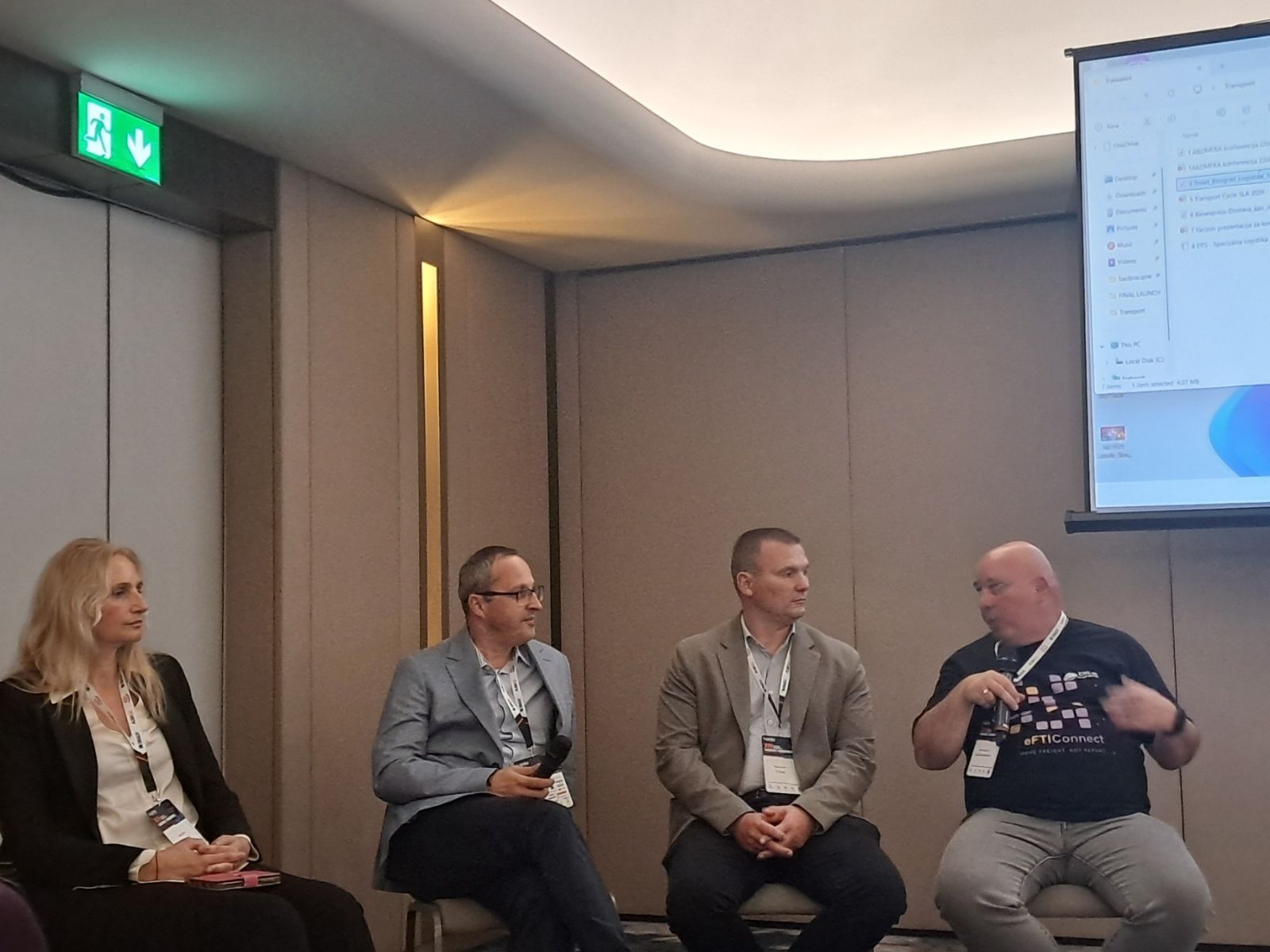
The eFTI Regulation was the subject of the talk “eFTI: The End of Paper in EU Freight Transport?”, which Željko Bajšanski gave on 22 October at the 14th Conference on Logistics and Transport, held at the Crowne Plaza hotel in Belgrade and organised by the Serbian Logistics Association (SLA). He then joined the panel “eCMR: From Paper to Digital Transport”, moderated by Mladenka Tošić of SLA, alongside Tihomir Ostojić of Lactalis Serbia, Tamara Zamernik of Hisense Europe and Matjaž Auflič of Trinet Informatika.
These are the talk's main messages. We published the five-step plan for getting ready by July 2027 before the conference.
What the Regulation changes, and what it does not
From 9 July 2027, Regulation (EU) 2020/1056 obliges all competent authorities in the EU to accept regulatory transport data in electronic form, through a certified eFTI platform. The rules are the same in all 27 Member States and cover road, rail, inland waterway and air transport. Sea transport is not included.
What eFTI is not matters just as much:
- It is not an obligation for carriers. The obligation is on the state, so anyone who wants to can keep travelling with paper documents.
- It introduces no new data. The data is the same as today, only in digital form.
- It is not the e-CMR. The e-CMR is a contractual document between the parties to a deal, while eFTI governs the relationship between business and the state.
- It does not replace customs. Declarations and transit stay in customs systems.
Why the EU is doing this
Paper slows down both inspections and payment: the same data is retyped several times, a digital document is accepted in some places and not in others, and checks take longer than they need to. The European Commission estimates savings for the sector at around one billion euros a year.
An example from the talk: unloading in Munich on a Friday. The CMR reaches the office seven to ten days later, only then is the invoice issued, and payment arrives 60 days after that. The 60 days are a matter of contract. The seven to ten days are a matter of paper.
What a check looks like
The data stays with business, on the eFTI platform, and there is no central state database. For a transport from Novi Sad to Stuttgart, a check looks like this:
- The driver shows a QR code on a phone or on paper.
- The inspector scans it, and the request goes through the German eFTI gate.
- Within seconds, the inspector sees only the data they are authorised to see.
Every access is logged.
What is still unfinished
The technical rules on data, access and platform requirements were adopted in 2024 and 2025. The rules on certifying platforms are late, and their deadline has already been moved. It is realistic to expect the first certified platforms only shortly before July 2027, possibly later, and to treat the first years as an adjustment period.
What this means for Serbia
The e-CMR and eFTI complement each other: the e-CMR is a document between companies, while eFTI gives authorities access to data. Data from the e-CMR can become the source for eFTI, entered only once, so whoever introduces the e-CMR has come halfway.
Since 2 November 2026, the Additional Protocol to the CMR Convention on the electronic consignment note has been in force for Serbia. On routes where both countries have ratified the Protocol, the e-CMR can have the same legal value as a paper consignment note. The legal framework now exists, and practice still has to catch up with it.
The eFTI Regulation reaches us through accession negotiations, through the Transport Community, and fastest of all through the market: EU clients are already asking for digital data. That is why preparation is not worth putting off.
One shipment, live
We closed the talk with a demonstration in eFTI Connect, connected to a demo eFTI gate:
- The order. We start from what a company already has: a transport order, a packing list or even a customs declaration (JCI) in PDF format. AI extracts the data and fills in the e-CMR, so nobody has to retype it. A person reviews the completed form before saving it.
- The e-CMR. The electronic consignment note is in one place for everyone involved in the transport.
- Signature at unloading. The signature is in the document straight away, so nobody waits for paper to come back.
- The check. The competent authority reaches the data through the eFTI gate.
To be precise: eFTI Connect is not yet a certified eFTI platform, and the demonstration used a demo gate, not a live national gate. We showed how the flow works, not an official inspection.
For the driver, this means less administration and less room for error. When goods are damaged or someone asks for more information, the documentation is in one place, not in a folder in the cab or scattered across emails, and remarks and photos were taken on the spot, with the signature.
Thank you
Thank you to the organisers at the Serbian Logistics Association (SLA), to Tihomir Ostojić of Lactalis Serbia and Tamara Zamernik of Hisense Europe for taking part in the panel, and to everyone who came, asked a question or stopped by our stand.
Special greetings to our colleagues at Trinet Informatika in Slovenia, and to Mr Matjaž Auflič, who joined Željko on the panel.
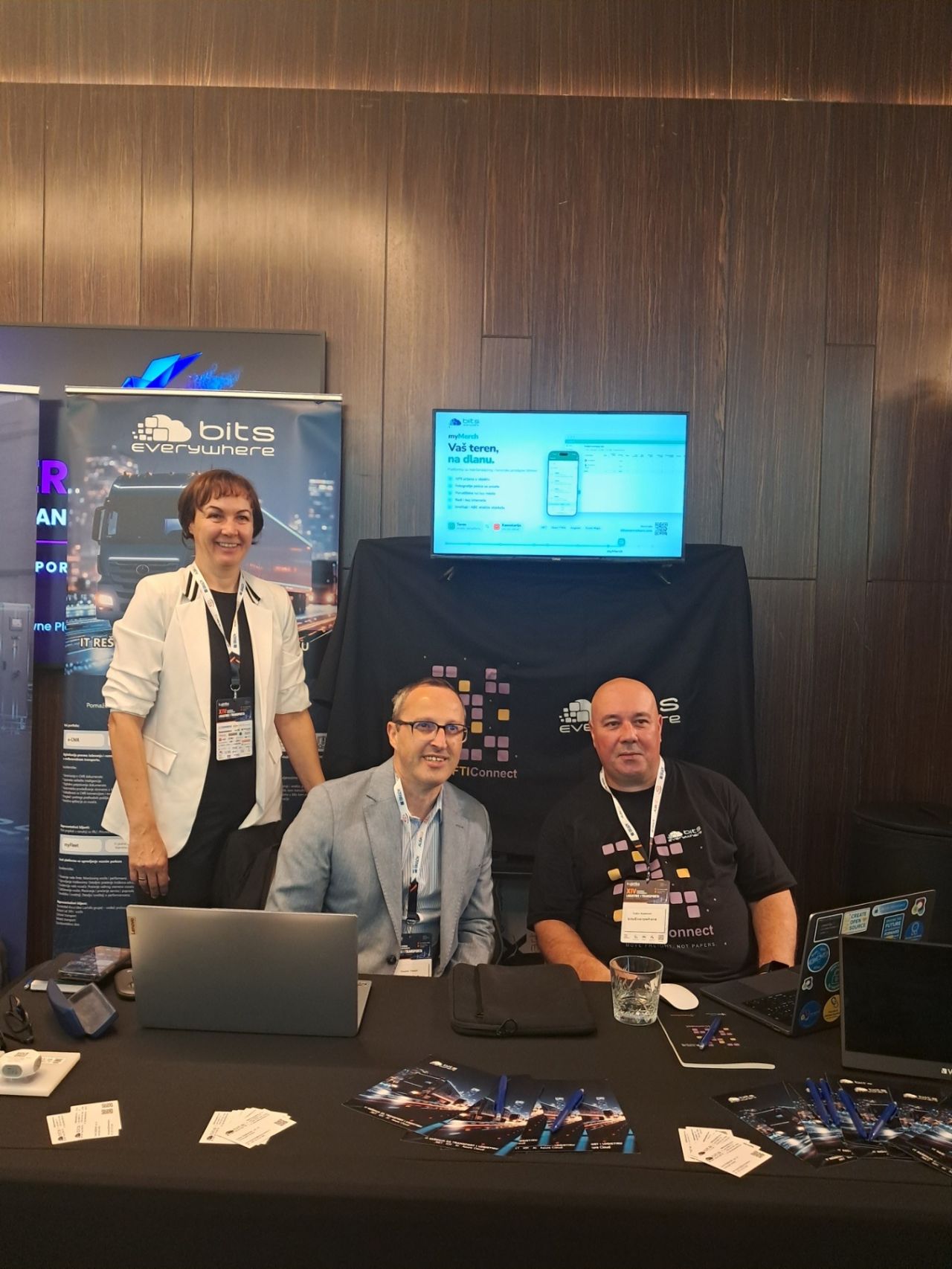
If you were not in Belgrade, write to us: we will gladly show you the same demonstration.
More about the conference: logistika.biz
Move freight, not papers.


