On Friday 22 May 2026 we brought carriers, forwarders and exporters from the north of Bačka into one room in Senta, the town I was born in, to talk through the eFTI Regulation and the electronic consignment note. Then we had lunch and walked down to the Tisa.
On Friday 22 May 2026 we held a workshop in Senta, on the Tisa. In the room were carriers, forwarders and export companies from the north of Bačka — several of them large enough that their trucks are at a border crossing while you read this sentence.
Senta is the town I was born in. I have presented this material in bigger halls and to bigger audiences, and none of them made me as careful about getting it right.
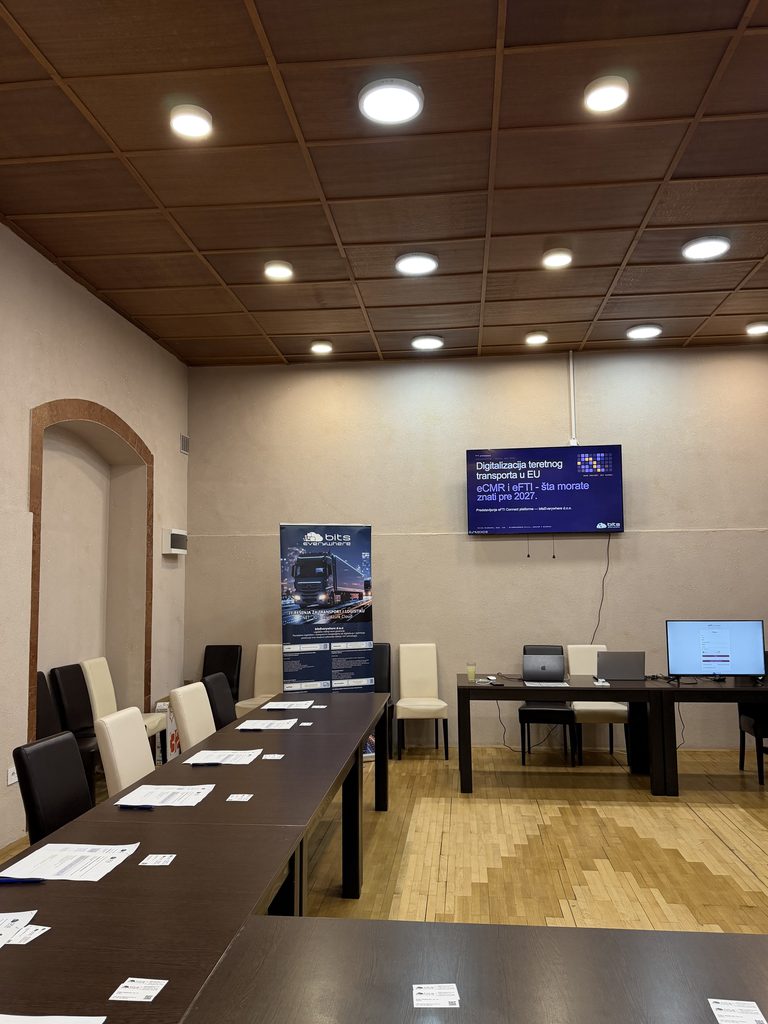
Forty minutes from an EU border
That is the whole reason to hold this session here rather than stream it.
For a company in Novi Sad or Belgrade, the EU border is a planning problem. For a company in Senta it is a Tuesday. Horgoš and Röszke are up the road; the drivers in these fleets cross into Hungary and back more often than most people commute. When the EU changes what an inspector may ask for at that crossing, this room finds out first — not from a newsletter, but from a truck standing still.
So the questions here are not "what is an electronic document". They are: will the officer on the Hungarian side take it, can my German customer's system read what I send, and does my invoice still have to wait for a signed paper to come back by post.
In two languages, because the room is
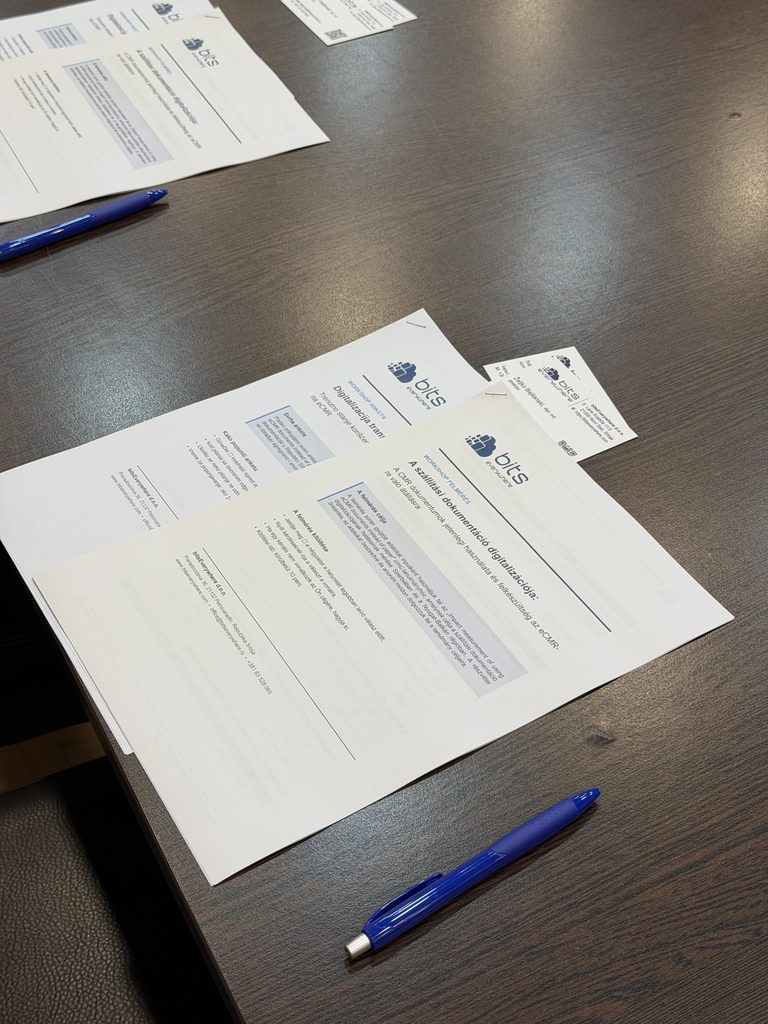
Senta is bilingual, so the workshop was. Every handout went out in Serbian and Hungarian, side by side — including a short questionnaire, about ten minutes, asking how each company uses CMR documents today and how ready it is to move to an eCMR.
We did not hand it out to look thorough. We hand it out because we would rather build against what these companies actually do than against what a slide deck assumes they do.
What we told them
The talk ran about an hour before the live demo, and it came down to a few things.
One date that matters: 9 July 2027. From that day, every EU member state must accept freight transport information shared electronically through a certified eFTI platform. That is Regulation (EU) 2020/1056, in force since August 2024. Since January 2026 platforms may operate and member states may already begin accepting electronic data.
Serbia is not in the EU — and that changes less than people hope. The Regulation binds member states, not Serbian companies. But it binds the authorities your drivers meet at the border, and it shapes what your customers in Germany, Austria and Hungary will expect to exchange with you. The obligation is theirs; the consequence is yours. Nobody in that room will be fined for using paper. They will simply lose the tender to a competitor who does not.
Some countries are not waiting for 2027. Spain's DCA — Documento de Control Administrativo, the administrative document accompanying road freight — must be digital only from 5 October 2026, with penalties up to €1,000 per breach, and it applies to any transport entering, leaving, crossing or operating inside Spain regardless of where the company is registered. Spain is first, others will follow, and none of them are waiting for the common EU framework.
The legal ground under the eCMR, said plainly. The CMR Convention is from 1956 and everyone in that room has held the paper version. The Additional Protocol of 2008, in force since 2011, gives the electronic consignment note the same legal force as the paper one — but only between countries that have ratified it. At the time of the workshop 41 states were party to it (UN treaty records, May 2026), Hungary, Slovenia, Austria, Germany and Italy among them, with North Macedonia and Albania joining in April 2026. Serbia had not ratified.
That asymmetry is uncomfortable to explain forty minutes from Röszke, and I explained it anyway. A room of people who cross that border for a living deserves the version with the caveat in it.
What a carrier gains. Faster crossings — a QR code instead of a folder. Fewer errors, because structured data is checked as it is entered. Lower cost: no printing, no couriers, no decade of paper archive. And the one that lands hardest with owners: faster payment, because the invoice stops waiting for a signed consignment note to travel back from Germany by post.
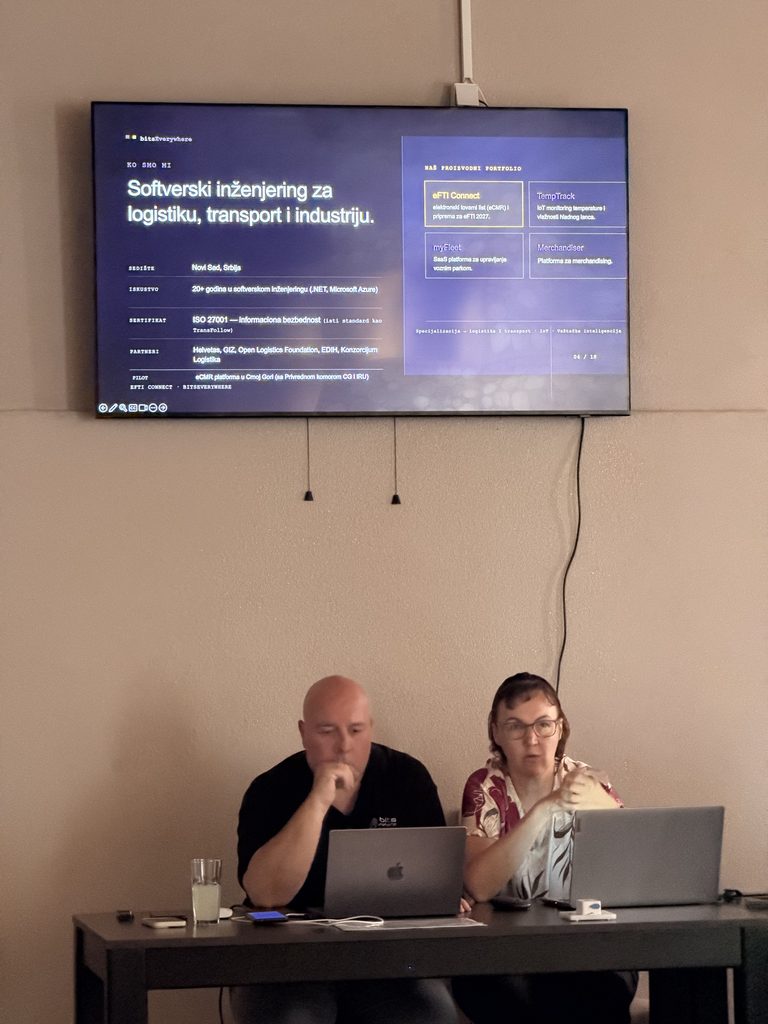
Then we showed it working: creating an eCMR as a forwarder, the driver's mobile app, signing at the loading point, an inspector verifying by QR code, and the dashboard behind it. I was there with Ivana Bajšanski, our CFO, and Maja Gojković, who runs our marketing — between the three of us the room got the legal picture, the numbers and the software, which is roughly the order in which people actually decide things.
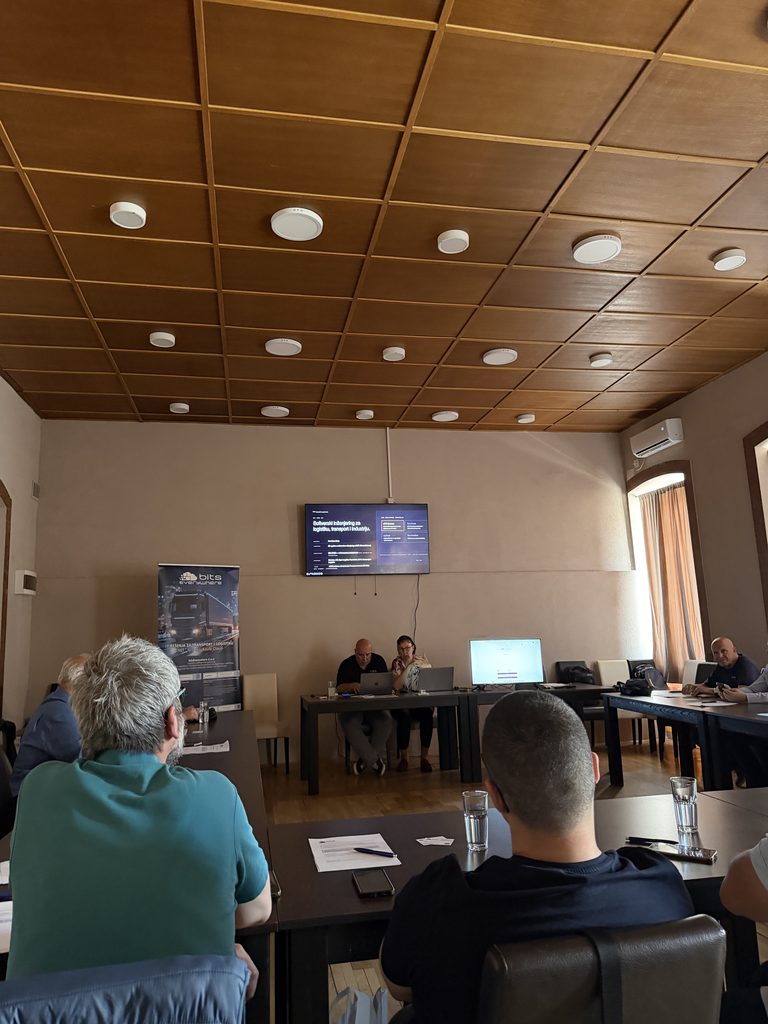
Then we sat down to lunch together
The best part of the day was not on a slide.
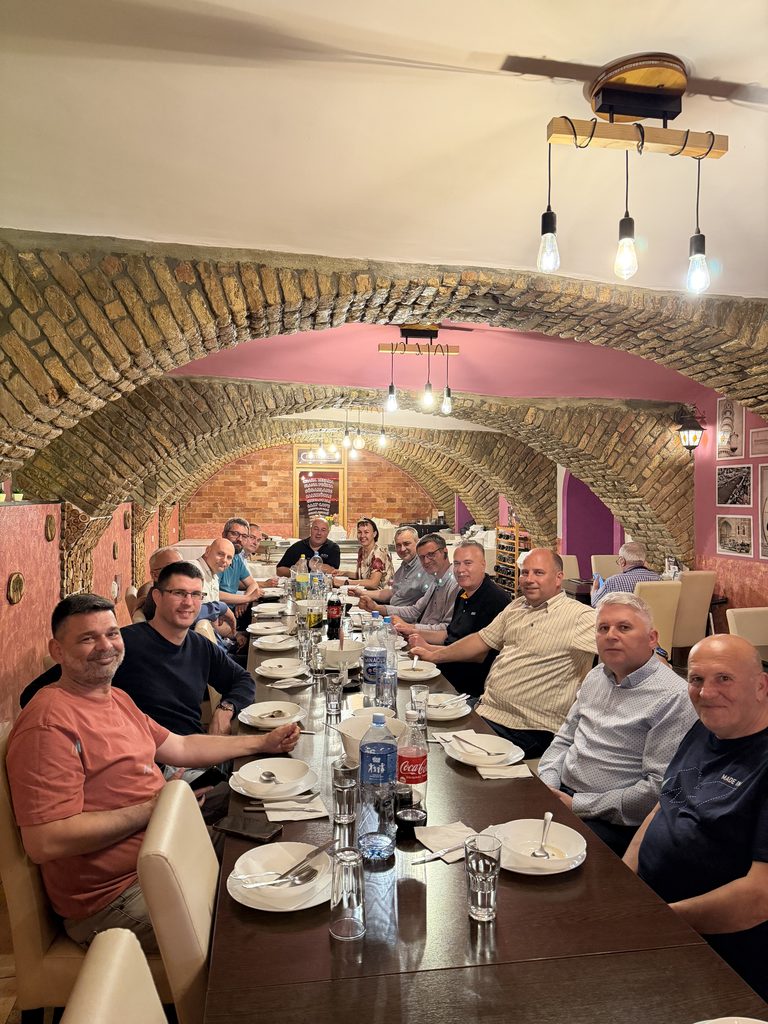
We sat down to lunch together afterwards — one long table, the conversation carrying on without a projector, and people who do the same job in different ways comparing notes. That is where the useful questions always come out. Then we walked down to the Tisa, to the bronze raftsman on the embankment with the old railway bridge behind him, and stood around in the evening light for a while.
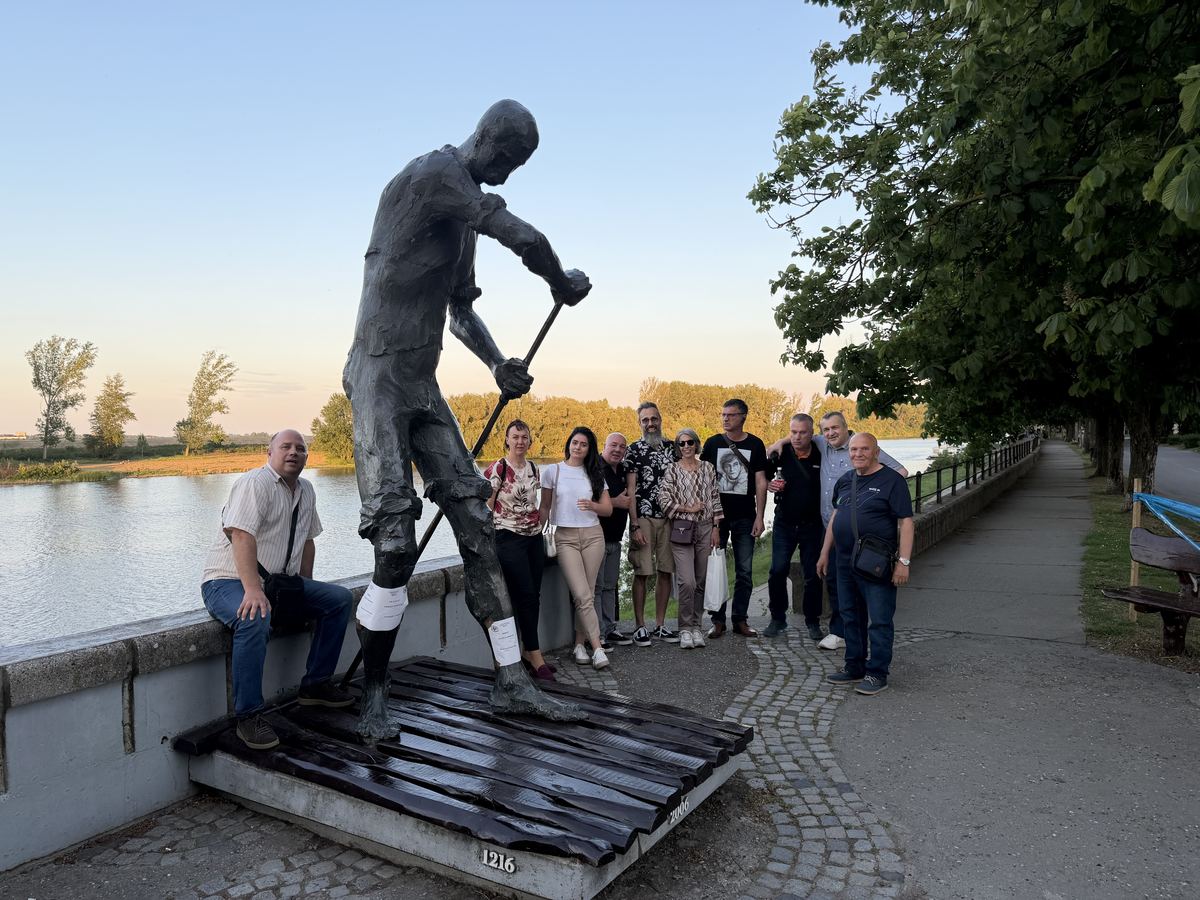
I have watched that river my whole life. Getting to stand next to it at the end of a working day spent explaining freight documents to people from my own town is not something I expected this job to give me.
Two things we said that Friday are already out of date
Both in the right direction.
Serbia has ratified the 2008 Additional Protocol. The slide that read "not ratified" was accurate on 22 May and was overtaken within weeks. The electronic consignment note is now legally equivalent to paper on international routes where the other country has ratified it too — which, for the Hungarian and Austrian runs this room drives most, is the case.
We joined the Open Logistics Foundation. In Senta we could say we build on their open eCMR standard and use their eSeal signer. On 9 July 2026 the Foundation announced bitsEverywhere as its first member company from Serbia, so since then we work inside the standard's own working groups. We wrote about what that does and does not mean — it is not a certification, and we will not present it as one.
A month after Senta we took the same material to the Regional Chamber of Commerce in Novi Sad; that session is written up here.
What we offered that room
The same three things, unchanged.
A free assessment: we come to you, watch how your documents actually move, and write a plan against your operation rather than our product catalogue. A pilot on one route, with one client — if it works we scale it, and if it does not, we have both learned something for the price of a few weeks. And integration rather than replacement: your ERP, TMS or warehouse system stays where it is, and the transport documents get an electronic layer over a REST API.
Thank you to everyone who gave up a Friday afternoon for this, and stayed for lunch, and walked to the river.
Companies that start in 2026 will meet 9 July 2027 comfortably. The ones that start in 2027 will meet it at the same time as their competitors, at the same crossing.
Move freight, not papers.


